
Bitcoin’s 4-year cycle is changing in 2025. Discover how halvings, ETFs, and global trends are reshaping the Bitcoin market cycle forever.
Bitcoin’s 4-year cycle has long been a defining pattern in the cryptocurrency market, shaping investor expectations and influencing every major Bitcoin bull run since its creation in 2009. This cycle, built around the scheduled “Bitcoin halving” events, plays a critical role in how the crypto market cycle evolves—often marking the transition between explosive growth and deep correction phases. Understanding how this 4-year rhythm works is essential for anyone looking to make smart Bitcoin investment decisions in 2025 and beyond.
At its core, the Bitcoin 4-year cycle is driven by the halving mechanism — a pre-programmed event that reduces the block reward miners receive by 50% roughly every four years. Historically, each Bitcoin halving has triggered a supply shock, lowering the rate at which new Bitcoins enter circulation, while demand often remains strong or even increases. This combination has repeatedly led to massive price surges followed by corrections, creating a recognizable crypto market cycle that traders and long-term holders track closely.
Why does this matter? Because the 4-year cycle has not only influenced Bitcoin price predictions but also the broader crypto market trends, including altcoin movements, investor sentiment, and even institutional adoption. As the 2024 halving fades into history and new economic forces—like ETFs, regulation, and global interest rates—shape the landscape, many are asking a critical question: Is Bitcoin’s 4-year cycle finally over, or is it simply evolving?
This blog explores the origins, mechanics, and future of the Bitcoin halving cycle, uncovering whether this time-tested rhythm will continue to dictate market movements or give way to a new era in cryptocurrency investing.
What is the 4-Year Bitcoin Cycle? (A Brief History from 2012–2024)
The Bitcoin 4-year cycle refers to the recurring pattern of price movements that occur around each Bitcoin halving event , when the reward miners earn for validating transactions is cut in half every 210,000 blocks, roughly every four years. This mechanism, hardcoded into Bitcoin’s protocol by its mysterious creator Satoshi Nakamoto, is designed to control supply and mimic the scarcity of precious metals like gold. The result has been a predictable rhythm of boom and correction phases that have shaped the crypto market cycle for over a decade.
The 2012 Halving – The Birth of the Cycle
The first Bitcoin halving took place on November 28, 2012, reducing the mining reward from 50 BTC to 25 BTC per block. Before the halving, Bitcoin traded below $13, but within a year, it surged past $1,000 for the first time. This marked the first major Bitcoin bull run, drawing global attention to the potential of decentralized money.
Learn more about the 2012 halving on BitcoinWiki.
The 2016 Halving – Mainstream Momentum
The second Bitcoin halving occurred on July 9, 2016, cutting the block reward to 12.5 BTC. During this cycle, Bitcoin evolved from a niche internet asset to a mainstream financial topic. Prices rose from about $650 pre-halving to nearly $20,000 by December 2017, creating massive wealth and sparking the 2017 crypto bull market.
See CoinMarketCap’s historical data for 2016–2017 Bitcoin prices.
The 2020 Halving – Institutional Adoption Begins
The third halving on May 11, 2020, reduced rewards to 6.25 BTC. This period marked the arrival of institutional investors — with companies like Tesla, MicroStrategy, and Square buying large amounts of Bitcoin. The price skyrocketed from around $8,000 to over $69,000 in November 2021, the highest in Bitcoin’s history at that time. The crypto market cycle expanded to include wider adoption, DeFi growth, and global regulation debates.
Read more about the 2020 halving on Investopedia.
The 2024 Halving – A New Phase for Bitcoin
The most recent Bitcoin halving happened on April 20, 2024, cutting rewards to 3.125 BTC. Unlike past cycles, this event occurred in a matured market — with Bitcoin ETFs, stronger regulatory frameworks, and an increasing link to traditional finance. Many analysts are now debating whether the old 4-year Bitcoin cycle pattern will hold or evolve into a new trend influenced by institutional demand and global macroeconomic factors.

Check the latest Bitcoin halving updates on Binance Academy.
Why It Matters
From 2012 to 2024, each Bitcoin halving has triggered major price rallies followed by corrections, forming the basis of the Bitcoin 4-year cycle. Understanding this pattern helps traders and investors anticipate potential market movements, plan entries, and manage risk effectively. However, as 2025 unfolds, many experts question whether this familiar rhythm still applies or if Bitcoin is entering a new phase of unpredictability.
The 2024 Halving: What Changed?
The 2024 Bitcoin halving marked a major turning point in the evolution of the Bitcoin 4-year cycle — not just because it reduced miner rewards from 6.25 BTC to 3.125 BTC, but because it occurred in an entirely different market environment than any previous cycle. This time, Bitcoin’s halving unfolded in a world where institutional investors, Bitcoin ETFs, and regulatory clarity played a dominant role, changing how the market reacted to this historic event.
A Mature Market with Institutional Influence
Unlike earlier halving events driven mainly by retail enthusiasm, the 2024 halving took place in a maturing financial ecosystem. The launch of spot Bitcoin ETFs in the U.S. — approved by the SEC in early 2024 — allowed large-scale investors, pension funds, and financial institutions to gain direct exposure to Bitcoin. This institutional participation brought liquidity, stability, and a new form of price discovery, altering the traditional Bitcoin market cycle dynamics.

Read more about Bitcoin ETFs on CNBC.
Reduced Volatility and Market Maturity
Historically, each Bitcoin halving triggered extreme volatility — sharp rallies followed by deep corrections. However, post-2024 data shows that Bitcoin’s volatility index (BVIN) has dropped compared to previous cycles. This reduced volatility may suggest that Bitcoin’s price is now influenced less by halving hype and more by macroeconomic factors, such as inflation trends, global interest rates, and investor sentiment.
The Role of Regulation
Another defining factor of the 2024 Bitcoin halving is the rise of regulatory frameworks across major markets, including the U.S., EU, and parts of Asia. Governments have introduced clearer crypto tax policies and institutional custody regulations, making Bitcoin more accessible to mainstream investors. While this has increased legitimacy, it may also have reduced the “wild west” behavior that fueled earlier crypto bull runs.

Explore crypto regulation updates on CoinDesk.
The Rise of Artificial Intelligence and Blockchain Integration
The 2024 halving also coincided with the rapid adoption of AI-powered blockchain analytics and on-chain monitoring tools, giving investors a deeper understanding of market movements. Advanced on-chain data revealed that long-term holders (often called HODLers) accumulated large amounts of Bitcoin before the halving — a sign of strong faith in the asset’s long-term potential, even as short-term traders anticipated less dramatic gains.
Price Action After the 2024 Halving
In contrast to the explosive rallies seen after the 2016 and 2020 halvings, Bitcoin’s post-2024 performance has been more gradual. Prices initially rose from around $63,000 before halving to test the $80,000 level months later, but without the parabolic surge seen in past cycles. Analysts attribute this to a combination of ETF inflows, lower supply shocks, and increased market efficiency.
Track Bitcoin’s live price performance on CoinMarketCap.
A New Kind of Bitcoin Cycle?
The 2024 halving has left the crypto community debating whether the traditional 4-year Bitcoin cycle is fading or simply evolving into a new phase — one driven by institutional demand rather than speculative hype. If previous cycles were defined by scarcity-driven rallies, the next era of Bitcoin could be shaped by adoption, regulation, and technology integration.
As Bitcoin enters 2025, one question remains at the heart of every discussion: Has the 4-year cycle truly ended, or has it matured into something even more powerful?
New Market Factors Affecting Bitcoin’s Cycle
The Bitcoin 4-year cycle has historically revolved around predictable halving events and retail-driven market behavior. However, in the post-2024 halving era, a new wave of external influences is reshaping the Bitcoin market cycle. Factors such as institutional adoption, spot Bitcoin ETFs, regulatory developments, and macroeconomic trends are changing how Bitcoin moves, potentially signaling a shift from the old cycle into a more complex financial model.
1. Institutional Adoption and ETFs
One of the biggest changes in the 2024–2025 market landscape is the unprecedented level of institutional investment in Bitcoin. With the approval of spot Bitcoin ETFs by the U.S. Securities and Exchange Commission (SEC) in early 2024, large financial institutions — including BlackRock, Fidelity, and ARK Invest — entered the market. These ETFs allow mainstream investors to buy and hold Bitcoin without managing private keys, making exposure to Bitcoin far more accessible.
This institutional presence provides liquidity and reduces price manipulation but also introduces new trading behavior. Institutions tend to make long-term, data-driven decisions rather than emotional trades, which can smooth out volatility and weaken the traditional boom-bust rhythm of the Bitcoin 4-year cycle.
Learn more about Bitcoin ETFs on Bloomberg.
2. Global Regulation and Compliance
Regulation is another major force redefining the crypto market cycle. Governments worldwide — from the European Union’s MiCA framework to U.S. crypto tax laws — are establishing clearer rules for digital assets. While early Bitcoin cycles thrived in a lightly regulated environment, 2025’s Bitcoin operates under closer scrutiny.
Regulation improves investor confidence, legitimizes the market, and attracts corporate adoption. However, it may also slow down speculative growth, creating steadier and more sustainable price action.

Read about MiCA and global crypto regulations on CoinDesk.
3. Macroeconomic Trends and Interest Rates
Bitcoin no longer operates in isolation from global markets. Factors like interest rates, inflation, and economic policy now directly influence its value. During previous Bitcoin bull runs, low interest rates fueled risk-taking in crypto. But in 2024 and 2025, rising global interest rates have tightened liquidity, making speculative investment less aggressive.
This evolving correlation between Bitcoin and traditional finance suggests that the asset is increasingly seen as a macro asset, similar to gold. As a result, its price behavior may now align more with global economic cycles than the fixed 4-year rhythm.
Check the latest Bitcoin–macro correlations on TradingView.
4. Technological Innovation and AI Integration
Technological innovation continues to influence the Bitcoin ecosystem. In 2025, AI-driven trading bots, on-chain analytics, and blockchain-based financial tools are providing smarter insights into market sentiment and whale behavior. These advancements make the market more efficient and reduce the emotional, hype-driven rallies that defined previous Bitcoin cycles.
Furthermore, the growing intersection between AI and blockchain is attracting tech-savvy investors who value Bitcoin for its integration potential, not just its price. This has made cryptocurrency investing more strategic and less cyclical.
5. The Role of Global Events and Geopolitics
Geopolitical instability, energy crises, and global policy changes are also influencing Bitcoin’s trajectory. As countries like El Salvador, Argentina, and Nigeria expand Bitcoin adoption, the digital asset is increasingly viewed as a hedge against currency devaluation. This growing real-world use adds a new dimension to the Bitcoin market cycle — one that is driven more by utility than speculation.

Read more about Bitcoin adoption on The Block.
The Shift Toward a New Bitcoin Era
These evolving factors show that Bitcoin’s 4-year cycle may no longer operate as a simple halving-to-peak pattern. Instead, the market is transitioning toward a data-driven, institutionally influenced, and globally regulated phase. While the Bitcoin halving still matters, it is now just one of several forces shaping the asset’s price behavior.
As Bitcoin heads deeper into 2025, the question remains: Are we witnessing the end of the 4-year Bitcoin cycle — or the birth of a new, more stable financial era built around digital assets?
Is the Bitcoin 4-Year Cycle Still Relevant in 2025?
As we move deeper into 2025, the big question dominating discussions across the crypto community is simple yet profound: Is Bitcoin’s 4-year cycle still relevant? For over a decade, the Bitcoin halving cycle has served as a reliable roadmap for predicting bull runs, market corrections, and accumulation phases. But with new forces such as institutional adoption, regulation, and macro-financial influences, some analysts argue that Bitcoin’s traditional cycle may be fading — or evolving into something far more complex.
Historical Patterns vs. Current Reality
Historically, the Bitcoin 4-year cycle followed a predictable rhythm:
- Halving year – A period of accumulation and reduced supply.
- Year after halving – A dramatic bull run, with Bitcoin hitting new all-time highs.
- Second year after halving – Market peak and early correction.
- Third year – Deep bear market and accumulation begins again.
This pattern was visible after the 2012, 2016, and 2020 halvings, forming a clear repeating structure. However, in the post-2024 halving environment, the rhythm appears less predictable. Bitcoin’s price has stabilized within a narrower range compared to the explosive gains of previous cycles, raising questions about whether halving events still drive the same supply-demand imbalance.

Check Bitcoin’s historical halving chart on CoinMarketCap.
Expert Opinions: Evolution, Not Extinction
Many crypto analysts and financial strategists agree that the 4-year Bitcoin cycle isn’t dead — it’s simply evolving. According to data from Glassnode, on-chain accumulation patterns and miner behavior still react strongly to halvings, but the resulting price impact is less immediate due to ETFs, derivatives, and institutional hedging strategies.
Industry experts such as PlanB, creator of the Stock-to-Flow (S2F) model, suggest that while halvings remain a key component of Bitcoin’s scarcity, the influence of macro liquidity and capital flow cycles could now play a more dominant role.
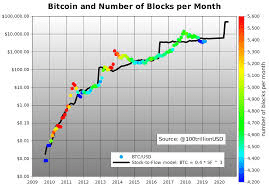
Read PlanB’s S2F model discussion on Medium.
Institutional Dampening Effect
In previous cycles, retail speculation drove extreme volatility. Now, institutional investors, ETFs, and algorithmic trading systems have introduced stability — what some call the “institutional dampening effect.” These large players accumulate Bitcoin gradually and use risk-hedging tools, making price action more controlled and less tied to emotional market cycles.
The result? Smaller short-term swings and a potentially longer but steadier bull market. This shift may mark the transformation of Bitcoin from a speculative asset into a global store of value comparable to gold.
Explore institutional Bitcoin data on CryptoQuant.
Macroeconomic Correlation
Another factor reducing the dominance of the traditional Bitcoin 4-year cycle is its increasing correlation with global macroeconomic events. In 2025, Bitcoin’s price has been closely tied to interest rate decisions, inflation data, and U.S. dollar strength. When central banks tighten monetary policy, Bitcoin’s growth slows; when liquidity expands, prices rise.
This correlation means Bitcoin now moves more in sync with traditional assets — signaling that it’s maturing as part of the broader financial system rather than existing in its own isolated cycle.
Check Bitcoin–macro correlations on TradingView.
Data Shows a Gradual Transformation
On-chain analytics reveal that long-term holders continue to accumulate, miner revenue remains stable, and new wallet creation is consistent — all signs of a healthy ecosystem. Yet, the absence of explosive price spikes post-2024 indicates that Bitcoin’s 4-year cycle may be stretching out, transforming into a longer macro cycle aligned with institutional capital flows and technological adoption rates.
So, Is the 4-Year Cycle Over?
Not exactly. The 4-year Bitcoin cycle is not dead — it’s adapting. While halvings still influence supply scarcity and miner economics, the market’s reaction is now shaped by a blend of new variables: ETFs, global regulation, macroeconomics, and institutional trading behavior. The result is a more mature, less volatile Bitcoin market that’s moving toward sustainable long-term growth.
The takeaway for investors? The Bitcoin halving cycle still matters, but it can no longer be your only guide. Smart investors in 2025 are blending on-chain data, macro analysis, and market sentiment to anticipate Bitcoin’s future direction.
As Bitcoin continues its evolution, one thing is certain: the digital gold standard is entering a new phase — not defined by predictable 4-year patterns, but by global adoption and real-world utility.
Has Bitcoin’s 4-Year Cycle Evolved or Ended?
As we stand in 2025, one truth is clear — Bitcoin’s 4-year cycle has not ended; it has evolved. What began as a predictable, halving-driven pattern has matured into a complex financial ecosystem shaped by institutional investment, global regulation, and macroeconomic dynamics. The traditional formula of “halving equals bull run” has given way to a more balanced and sustainable Bitcoin market cycle, where multiple factors now determine momentum and price direction.
A Shift from Speculation to Strategy
In earlier years, the Bitcoin halving cycle sparked waves of speculation as investors anticipated explosive post-halving rallies. But today, Bitcoin is viewed less as a quick-profit asset and more as a long-term store of value. Institutional adoption through ETFs and corporate balance sheets has brought new stability, turning Bitcoin into a strategic hedge against inflation and economic uncertainty.
Retail investors are also becoming more informed, relying on on-chain analytics, market sentiment data, and macro insights to make calculated moves. This shift toward knowledge-based investing shows that Bitcoin’s growth is now anchored in fundamentals — not just fear and greed.

Learn more about long-term Bitcoin investing strategies on Binance Academy.
Why the 4-Year Pattern Still Matters
Despite these changes, the Bitcoin 4-year cycle remains an important guidepost. The halving continues to reduce supply, influencing market psychology and long-term valuation models like Stock-to-Flow (S2F). Even if the timing and scale of bull runs are shifting, halvings still serve as a reminder of Bitcoin’s deflationary design, one of its most powerful features.
As long as Bitcoin’s supply remains fixed at 21 million coins, scarcity will play a central role in determining value — ensuring that the halving cycle retains influence, even in a more complex market structure.
Looking Ahead: Bitcoin Beyond the Cycle
The future of Bitcoin may no longer be defined by rigid 4-year patterns. Instead, its growth will depend on global adoption, technological integration, and financial innovation. Emerging trends like AI-driven blockchain analytics, Lightning Network adoption, and nation-level Bitcoin policies could all play key roles in shaping what comes next.
The 2025 market shows that Bitcoin is transitioning from an experimental digital currency into a recognized global asset — a financial instrument that transcends cycles and becomes part of the world’s economic foundation.
Final Thoughts
So, is Bitcoin’s 4-year cycle over? Not quite. It’s evolving — adapting to the realities of a world where digital assets are merging with traditional finance. The halving remains relevant, but it’s now just one piece of a broader puzzle driven by innovation, regulation, and global demand.
For investors, traders, and enthusiasts, the message is simple: don’t just follow the cycle — understand the system. Those who adapt to this new era of Bitcoin will not only survive the market’s shifts but thrive in its long-term evolution.Track Bitcoin’s live price and market trends on CoinMarketCap
Explore expert halving analyses on CoinDesk